How a book advance really works
What a traditional publishing advance is, how it is paid, how many copies it takes to earn out, what happens if it never does, and what an advance means for a business author weighing it against owning the book. Every contract term here comes from the Authors Guild's model contract, checked October 22, 2026.
What a book advance is
A book advance is money a traditional publisher pays you before your book has sold a copy. The Authors Guild Model Trade Book Contract describes it as a non-refundable advance "against and on account of all royalties." In plain terms, it is your future royalties, paid early.
That one phrase explains how the rest works. Every royalty your book earns is first set against the advance. Until the royalties add up to more than the advance, no further royalty money reaches you. The point at which they pass the advance is called earning out. After it, you receive royalties on each copy, as set out on book royalties explained.
How much is a book advance?
It varies, and there is no reliable published average. The Authors Guild model contract leaves the amount blank. Its commentary says advances depend on the publisher's financial resources, the author's reputation, how well a previous book did, the subject matter and the audience. The Guild's 2023 author income survey counts advances inside "book income" alongside royalties and licensing fees, and its published summary does not break out a typical advance either.
What the Guild does suggest is useful: ask your agent or the publisher for the projected first-year sales and the list price. An advance is roughly the publisher's estimate of what your royalties will be, so those two numbers let you check an offer with the arithmetic below.
Source: Authors Guild Model Trade Book Contract, Section 4, Advance Against Royalties, with commentary; Authors Guild 2023 Author Income Survey. Both checked October 22, 2026.
How the advance is paid
An advance is rarely paid in one check. The model contract splits it into installments:
On signing
When you and the publisher sign the contract.
On acceptance
When the publisher accepts the complete manuscript. The Guild recommends tying this payment to delivery instead, because acceptance is in the publisher's hands.
On publication
When the book is first published, or within a set number of months after acceptance, whichever comes first, so a delayed publication date does not delay your money.
The Guild's commentary advises authors to negotiate the full amount in two equal installments for advances of $40,000 or less, and no more than three installments for $40,000 to $75,000. Its view is that every advance should be paid in three installments or fewer, or within a year of publication, because the advance is meant to fund the writing.
After publication, royalties are reported on a schedule. The model contract has the publisher prepare a statement twice a year and send it, with any payment due, within three months after each period ends. It also lets the publisher hold back a reserve against returned copies, up to 35% of amounts due, during the first four accounting periods, and no reserve on ebooks.
Sources: Section 4, Advance Against Royalties; Section 5, Royalties; Section 13, Statements of Account, all from the Authors Guild Model Trade Book Contract, checked October 22, 2026.
How an advance earns out, step by step
The royalty rates below are the ones in the Authors Guild model contract, already cited on book royalties explained: for hardcovers, 10% of list price on the first 5,000 copies, 12.5% on the next 5,000 and 15% after 10,000; for trade paperbacks, 7.5% of list price.
Say a publisher offers you a $40,000 advance. That is a round number chosen for the arithmetic, not a typical figure. Your hardcover lists at $28.
Payments. Following the Guild's advice for advances of $40,000 or less, you negotiate two equal installments: $40,000 ÷ 2 = $20,000 on signing and $20,000 on delivery of the manuscript.
First 5,000 copies at 10%. Royalty per copy: 10% × $28 = $2.80. Earned: 5,000 × $2.80 = $14,000. Still to earn out: $40,000 − $14,000 = $26,000.
Next 5,000 copies at 12.5%. Royalty per copy: 12.5% × $28 = $3.50. Earned: 5,000 × $3.50 = $17,500. Still to earn out: $26,000 − $17,500 = $8,500.
Copies after 10,000 at 15%. Royalty per copy: 15% × $28 = $4.20. Copies needed: $8,500 ÷ $4.20 = 2,023.8, so 2,024 copies.
Earn-out point: 5,000 + 5,000 + 2,024 = 12,024 hardcovers. From copy 12,025 on, you receive $4.20 a copy, less any reserve for returns.
If every copy were a trade paperback at $18 instead: 7.5% × $18 = $1.35 a copy, and $40,000 ÷ $1.35 = 29,629.6, so 29,630 paperbacks to earn out.
Real books sell a mix of formats, each at its own rate, and all of their royalties count toward the same advance.
For a sense of scale, the Scribe Method chapter on realistic and unrealistic expectations for a book says the average nonfiction book sells fewer than 250 copies a year. At that pace, 12,024 copies would take 12,024 ÷ 250 = 48 years. A publisher that pays a large advance expects the book to sell far above average, and many books do not reach the number.
If the advance never earns out
You keep the advance. The model contract says that "in no event shall an unearned advance be considered an overpayment," which means the publisher cannot ask for the shortfall back because the book sold less than hoped.
Same $40,000 advance and $28 hardcover. The book sells 4,000 copies in total.
Royalties earned: 4,000 × $2.80 = $11,200. Unearned balance: $40,000 − $11,200 = $28,800.
You keep the full $40,000. You receive no royalty payments beyond it, because the book never earned past it. The $28,800 gap is the publisher's loss.
Two situations can lead to repaying money. Under the model contract's delivery section, if the agreement is ended because the manuscript was late, the publisher may ask for the money paid so far. If the publisher rejects the manuscript and ends the contract, the model clause has the author repay from the "first proceeds" of a later sale of the book to someone else. The Guild warns that some contracts demand all or half of the advance back regardless, and recommends negotiating the first-proceeds version.
Sources: Section 13, Statements of Account and Section 7, Delivery, Authors Guild Model Trade Book Contract, checked October 22, 2026.
What an advance means for a business author
An advance is the one line where a traditional deal puts money in your hands before the book sells. For a business author, it helps to set it against the other lines, because the book's value usually comes from the clients, fees and talks it leads to, and those can come with any route.
| Traditional deal with an advance | Owning the book | |
|---|---|---|
| Money up front | The publisher pays you the advance, in installments | You pay to make the book; see what a book costs |
| Who decides if it is published | The publisher, usually after a proposal and an agent | You |
| Royalty per copy | Model contract rates, for example $2.80 on a $28 hardcover at 10%, paid only after earn-out | Your own figure, for example about $6.79 on a $17.99 KDP paperback (try the KDP royalty calculator) |
| Rights and decisions | Licensed to the publisher, which takes part in decisions such as the cover and title | Kept by you |
| Copies for clients and events | Bought from the publisher on the contract's terms | Printed and shipped when you order them |
Neither column is better for everyone. One way to compare them is to put both into the same math.
Say a consultant has a $40,000 offer, and owning the book would cost $30,000 all in, a figure taken from what a book costs for the route they would choose. Both books would reach the same readers and bring the same clients.
Money difference before any royalties: $40,000 received versus $30,000 spent, a gap of $40,000 + $30,000 = $70,000 in favor of the deal.
Royalty difference per paperback, using the rates above: $6.79 owned versus $1.35 on an $18 trade paperback at 7.5%, so $6.79 − $1.35 = $5.44 a copy. Copies to close the $70,000 gap: $70,000 ÷ $5.44 = 12,867.6, so 12,868 copies.
On those assumptions, royalties alone favor the deal unless the book sells about 12,900 paperbacks. The decision then turns on the lines the arithmetic leaves out: control of the title and the angle, which shapes which clients the book attracts, and how easily you can put copies in front of prospects.
To run your own version, enter the book cost and royalty per copy for each route in the Book Value Calculator. For the traditional route, enter your own costs (your time, any writing help, copies you buy) minus the advance, and count royalties only on copies past the earn-out point. How authors make money covers the other ways a book pays.
Scribe authors who weighed a deal
Several Scribe authors have had traditional offers or traditional books and described the choice in their published stories. These are strong results chosen from Scribe Media's success stories. They are not typical, and nobody can promise them.
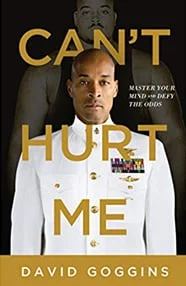

- David Goggins had a $300,000 advance on the table from two of the top five publishing houses, as his story recounts from his interview on the James Altucher Show. He turned it down to keep ownership of his life story, published Can't Hurt Me with Scribe, and his story reports 3.5 times the royalties on a book that has sold more than 3 million copies (read the story).
- Shaan Patel was rejected by 100 agents and publishers, then McGraw Hill published his first book, which sold more than 50,000 copies. He made 30 to 50 cents a copy. On his Scribe book he earns $13 a copy (read the story).
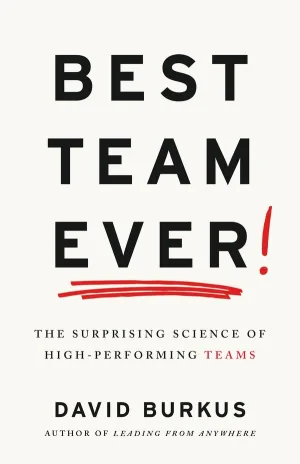
- David Burkus published four books with traditional houses before Best Team Ever. His rule is arithmetic: he assumes a successful book sells at least about 10,000 copies, and says an offer of somewhere between $75,000 and $100,000 is where he would take the traditional money. His story also reports that his traditionally published networking book brought him two speaking gigs in its entire history (read the story).
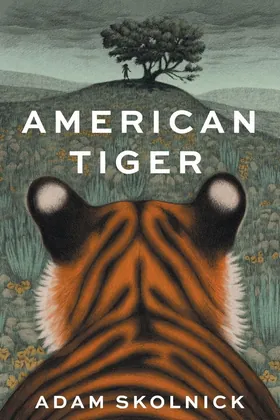
- Adam Skolnick, who helped write Can't Hurt Me, was offered advances of $5,000 to $15,000 by indie presses for his debut novel. He decided that trading away most of the royalties for that advance did not make sense, and published American Tiger with Scribe. After he signed, a nonfiction book deal with Doubleday that had been stalled moved again (read the story).
Those offers are each author's own, not benchmarks. The useful part is the method they share: put the offer next to the royalties and the business the book would bring, then decide.