Your book is selling slowly. Now what?
For an author whose book is selling fewer copies than hoped: what normal sales look like for nonfiction, why sales are the wrong scoreboard for a business book, how to find out what the book is doing anyway, what to change if it is not working, and when low sales really do signal a problem.
What normal sales look like
The Scribe Method chapter on realistic and unrealistic expectations for a book says the average nonfiction book sells fewer than 250 copies a year and "less than 2,000 copies over its lifetime." The same chapter notes how crowded the shelf is: over 13 million books already in print, and about 300,000 published in the U.S. alone in 2015.
That means a business book selling 20 copies a month is not broken. It is average. If you expected thousands of copies in year one, the gap is mostly in expectations.
It also helps to see what a few hundred copies are worth in royalties. On Amazon KDP, a $17.99, 250-page paperback earns about $6.79 a copy (the arithmetic is on book royalties explained, and the KDP royalty calculator works out your own figure). At that rate, 200 copies a year is 200 × $6.79 = $1,358. Doubling sales would add another $1,358. For a book that cost tens of thousands of dollars to make, neither number decides whether it was worth it.
Why sales are the wrong scoreboard for a business book
A scoreboard should measure the thing you are trying to win. Most business books are written to win clients, talks, hires or trust. Copies sold measures something else: how many strangers paid for the book through a store.
Three things make sales a poor measure of a business book:
- The best copies are often free. A copy you mail to a prospect, hand out after a talk or send ahead of a proposal never shows up as a sale. It is also the copy most likely to turn into a client.
- One reader can outweigh a thousand buyers. If one client is worth $20,000 to you after the cost of the work, that one reader is worth more than 2,900 copies at $6.79. Break-even math shows the same comparison for any book cost.
- Store buyers are hard to see. Amazon does not tell you who bought your book. Rachel A. Williamson sells signed copies from her own site partly because it captures buyer details Amazon does not share (read her story).
The useful question is whether the book is doing the job you wrote it for. That takes a different set of numbers.
How to find out what the book is doing
Run a 90-day check. At the end you will know whether you have a sales problem, a distribution problem or none.
Ask every new client how they heard of you
Put it on your intake form and in your first call: "How did you hear about us?" and then "Have you read the book, or any part of it?" Write down the answer in their own words. Count a client for the book only when they name it. How to value a book explains why undercounting is the safer error.
Count conversations where the book came up
Every call, email or meeting where someone mentions the book, quotes it, or asks for a copy. A prospect who arrives having read chapter four is a book conversation even if they bought nothing.
Count bookings
Podcast invitations, talks, workshops, panel seats, interviews. Note which ones mentioned the book in the invitation.
Count copies placed, not just copies sold
Copies you gave away, mailed, sold in bulk or handed out at events, and to whom. This is your real distribution.
Look at the result after 90 days
Put the client and talk figures into the Book Value Calculator next to your honest sales number, and see which line carries the value.
| What to count | Where it comes from | What it tells you |
|---|---|---|
| Clients who name the book | Intake form, first call | Whether the book brings business |
| Conversations that mention it | Calls, email, meetings | Whether the right people are reading it |
| Bookings that mention it | Invitations | Whether it is building your standing |
| Copies placed with prospects | Your own records | Whether enough of the right people have a copy |
| Copies sold | Royalty reports | How many strangers found it through a store |
Say your book sold 180 copies in its first year, at a royalty of $6.79 a copy, and it cost you $44,000 to make. On sales alone: 180 × $6.79 = $1,222.20 a year. It would take $44,000 ÷ $1,222.20 = 36 years to pay back.
Now the 90-day check turns up two clients a year who name the book, each worth $12,000 to you after the cost of the work, and one paid talk a year at $4,000 where the organizer found you through the book.
Per year: (2 × $12,000) + (1 × $4,000) + $1,222.20 = $24,000 + $4,000 + $1,222.20 = $29,222.20.
Payback point: $44,000 ÷ $29,222.20 = 1.51 years, or about 18 months.
Copies sold are $1,222.20 of $29,222.20, about 4% of the value.
Open these numbers in the calculator, then change the copies line to 50 or to 500. The answer barely moves. Change the clients line from 2 to 1 and it moves a lot. That is the line to watch.
Authors whose books paid off without big sales
These four Scribe authors measure their books by something other than copies sold. They are strong results chosen from Scribe Media's published success stories, not typical ones, and nobody can promise them. Each card links to the full story.

Paul Hobby published Glorious Tension in 2023 and, by his own account, has made no attempt to sell it. Three years later it still brings him email from strangers and invitations to speak to clubs that had assumed he was not one of them, because someone read the book and reported back (read his story). A sales report would show none of that.
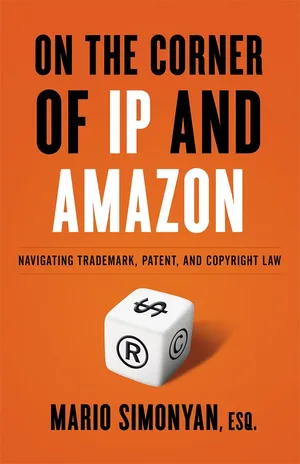
Mario Simonyan's law firm has handed out close to ten thousand copies of On the Corner of IP and Amazon in three and a half years and has never run an Amazon ad for it. He tracks distribution, not retail sales. His sales team uses the book inside consultations: when a question comes up, they point the prospect to the chapter that covers it and offer a printed copy or the PDF, and the firm's cold mail campaigns put a printed copy in the envelope. In his words: "The book is here to help the business generate leads and get qualified leads." (read his story)
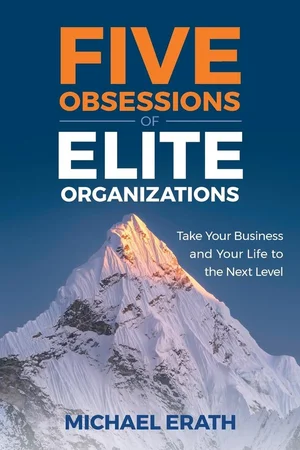
Michael Erath mails 75 to 100 copies of Five Obsessions of Elite Organizations a month to targeted prospects, at an all-in cost of about $16 a book, and logs each one in his CRM by name and company. He treats it as the cost of winning a client: if one book in fifty turns into a client, it works for him (read his story). In plain arithmetic, 50 books × $16 = $800 of books per client won.
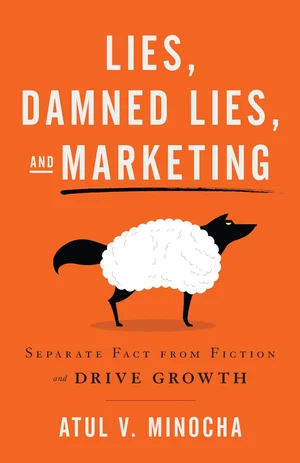
Atul Minocha budgeted about $60,000 for Lies, Damn Lies, and Marketing and expected a three-to-five year payback. His story measures the result in projects: after the book came out, his project load jumped, and he recovered the cost in six months (read his story).
What to change if the book is not working
If the 90-day check comes back empty, with no clients naming the book, no conversations and no bookings, something needs to change. Work through these in order.
1. The book page
Before anyone reads a page, they judge the book by its title, the person recommending it, the cover, the description, the blurbs, the reviews and the author bio. The Scribe Method chapter on how people really judge a book walks through all ten factors. Open your own Amazon page as a stranger would and check:
- Does the subtitle say who the book is for and what they get?
- Does the description open with the reader's problem? The chapter on writing a book description that sells gives a structure to rewrite it.
- Does the author bio make clear why you, and how to reach you?
- Does it have reviews from real readers? If not, ask the clients and colleagues who have read it.
2. Who has a copy
A business book works when the people who could hire you have read it. Write down the 50 to 100 people you most want as clients, partners or hosts, and mail each of them a copy with a short note. Michael Erath's monthly mailing, above, is this idea run as a habit. Richard Shaull describes running outbound campaigns that simply offer to ship his book free to the exact buyer he wants (Author Hour interview). Count the copies and the cost; both belong in your book's numbers.
3. Using it in the sales process
The book should show up in your sales conversations, not only on a shelf. A few ways Scribe authors do it:
- Point to a chapter. When a prospect asks a question the book answers, send that chapter. Chris Belchamber wrote down his investment approach partly so he could point prospects to the chapter instead of arguing it again on every call (Author Hour interview).
- Give it to the sales team. Bryan Miles positioned his book as a prospecting tool his sales team could use with potential clients (read his story).
- Collect readers at talks. Brandon Pipkin's firm ends presentations with a QR code that trades the free audiobook for an email address, so readers land in the firm's CRM (Author Hour interview).
When low sales do signal a problem
Low sales are not always harmless. They matter in these cases:
| What you see | What it probably means | What to do |
|---|---|---|
| Low sales, and clients or bookings mention the book | The book is working. Sales are the wrong measure for it. | Keep placing copies with the right people. Track the client line. |
| Low sales, no mentions, few copies given away | A distribution problem. The right people do not have it. | Build the list of 50 to 100 and mail copies. |
| Low sales, many copies given away, still no mentions | The book may not lead anywhere: no clear next step, or the wrong reader. | Check that the book says who you help and how to reach you. Ask a few recipients what they thought. |
| Low sales, and the book was meant to earn from copies | A real problem for that plan. | Fix the book page first, then look at price and audience. Run the royalty math to see what volume you need. |
| Low sales on a book written for a group (students, a sales team, members) | The buyers for that group have not been reached. | Talk to the people who buy for the group, such as a dean or head of sales, about bulk orders. |
The fourth row is the one to take seriously. If your plan really was to live on royalties, the arithmetic is unforgiving: at $6.79 a copy, $50,000 a year takes about 7,364 copies a year, every year. How authors make money covers the books that do earn from volume and the other ways a book can pay.
And if the book was never meant to make money at all, if you wrote it to help a group of readers or to leave a record, low sales may not be the right question either. Value beyond money covers how to weigh those results.
Put your real copies number into the Book Value Calculator, however low, next to what your 90-day check found. It shows each line and the payback point, so you can see whether the copies line was ever the one that mattered.
Sources: The Scribe Method, Realistic and Unrealistic Expectations for a Book; How People Really Judge a Book; royalty per copy from Amazon KDP's paperback royalty and printing cost pages, as set out on book royalties explained. Author results and tactics from Scribe Media success stories and Author Hour interviews, linked in the text.