What a book adds to your speaking fees
For many authors, paid talks are the second-largest line in the math. Here is how to count only the talks and fee increases the book earned, and what Scribe authors report.
Why a book changes the speaking line
Event organizers book speakers who are safe bets: someone the audience will take seriously, with a clear topic and something to take home. A book helps with all three. It is proof that you have thought the subject through, it gives the organizer a title to put on the program, and it gives the audience a next step after the talk.
The Scribe Method chapter on how to make money with your book lists paid speaking as one of the main ways books earn money for their authors, and describes a book as a credential for professional speakers: it is possible to start without one, but having one tends to raise the fee.
In the Book Value Calculator, this is the "paid talks from the book" line: the number of paid talks per year that came from the book, times the fee for each one.
How to count it
The book can change your speaking income in two ways, and they need to be counted separately.
New talks
Talks you were booked for because of the book: an organizer who read it, a conference on its subject, an invitation from a reader. These go in the paid talks line, at the fee you are paid for them.
A higher fee on talks you would have had anyway
If the book lets you charge more for the same kind of talk, the increase is book value too. Multiply the increase by the talks it applies to and add that figure to the other value line, so it is not counted twice.
Free talks belong here only if they lead to something you can price, such as a client. In that case, count the client in the client line, not the talk.
A worked example
Say you are an executive coach. Before the book you gave 4 paid talks a year at $5,000 each. In the year after the book, you give 6 paid talks a year at $7,500 each.
Speaking income before: 4 × $5,000 = $20,000.
Speaking income after: 6 × $7,500 = $45,000.
Difference the book made: $45,000 − $20,000 = $25,000 a year.
Split it the way the calculator counts it:
New talks: 2 × $7,500 = $15,000. Enter 2 paid talks from the book at a $7,500 fee.
Higher fee on the 4 talks you would have had anyway: 4 × ($7,500 − $5,000) = 4 × $2,500 = $10,000. Add $10,000 to other value.
Check: $15,000 + $10,000 = $25,000.
If the book cost $44,000, the speaking line alone would pay it back in $44,000 ÷ $25,000 = 1.76 years, about 21 months. Any clients the talks lead to come on top.
Notice what the example does not do: it does not count all 6 talks at $7,500 as book value. That would credit the book with $45,000 a year, including $20,000 you were already earning.
What authors report: fees before and after
Some Scribe success stories give a speaking fee before and after the book, or a multiple. Here they are in one table, copied exactly from the stories. These are strong results chosen from Scribe's published stories. They are not typical, and nobody can promise them.
| Author and book | What the story reports |
|---|---|
| Cameron Herold, The Second in Command | $30,000 speaking fee after the books, up from $15,000 |
| John Ruhlin, Beyond Giftology | $20K+ speaking fee, up from $7,500; 15+ paid speaking gigs in year one |
| Nikki Barua, Beyond Barriers | 10x higher speaking fees after publishing; 5x more speaking requests |
| Jeremy Burrows, The Leader Assistant | 5-10x higher speaking fees as a published author |
| Jesse Cole, Fans First | 500% increase in paid speaking; 20 paid speaking gigs since publishing, at higher fees |
| Michel Falcon, People-First Culture | $15K single keynote booked via the book |
| Melissa Gonzalez, The Pop Up Paradigm | $5K per speaking gig, booked dozens of times a year |
| Mark Baird, Rules to Riches | 1/mo speaking engagements now, up from none before |
Each row comes from the author's story on scribemedia.com; the cards below link to the stories.
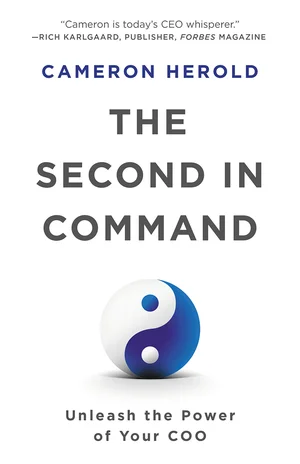
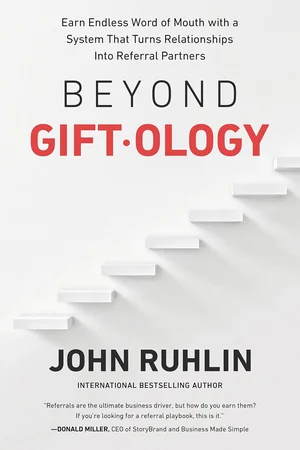

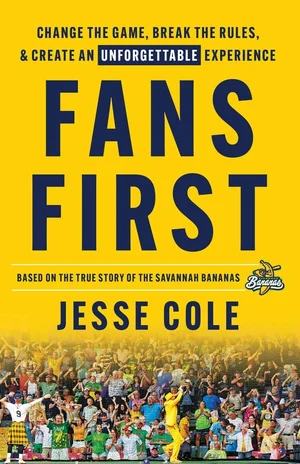

Two patterns stand out. First, the fee changes are large where the author already had a subject and an audience, and the book made them the obvious choice for it. Second, several authors describe the book changing who represents them: Matt Shoup's story describes being signed by a speaking agent after Painted Baby, who then booked him on bigger stages (read the story). More are on the author results page.
Books sold at talks
Talks can also move copies, often in bulk. An organizer may buy a copy for every attendee, or a company may buy copies for its team after hearing you. Real examples from Scribe stories: Rachel A. Williamson reports about 200 books an event host pre-bought for attendees (story), and Tofe Evans reports that Bank of Queensland booked him for a country-wide speaking tour and bought 50 copies after his talk (story).
Say an organizer buys 150 copies at $15 each, and your own cost per copy, printed and shipped, is $6. Check your real cost with your printer before using a figure like this.
Margin: 150 × ($15 − $6) = 150 × $9 = $1,350.
That $1,350 is real money but small next to the fee. In the calculator, add it to copies sold (150 copies at a royalty-like margin of $9) only if you expect it every year; otherwise leave it out.
Four traps
- Counting every talk. Count the change the book made, as in the worked example.
- Counting the fee, not what you keep. Travel days and preparation have a cost. If a $10,000 talk takes three days, compare it with what those three days would earn otherwise.
- Assuming bookings follow automatically. The authors in the table used their books: they sent them to organizers, spoke on the book's subject and made it easy to book them. A book on a shelf does not book talks.
- Double counting clients. If a talk leads to a client, count the client once, in the client line.
Put your own numbers in the Book Value Calculator to see how the speaking line compares with the others, and use break-even math to see how many talks would pay back the book on their own.
Sources: The Scribe Method, How to Make Money With Your Book; author results from Scribe Media success stories, linked on each card and in the text.