How to value a book for your business
A book is worth what it leads to, minus what it costs. Here is how to put a number on each thing it leads to, with a full worked example and a cautious version of the same example.
The idea in one sentence
For a business book, value = (new clients × value of one client) + fee increases + (paid talks × fee per talk) + (copies sold × royalty per copy) + other value, counted over a number of years, compared with what the book cost.
That is the whole method. Everything else on this page is about filling in each part honestly. Most book calculators on the web only do the copies-sold part, because it is the easiest to count. It is also, for most business authors, the smallest. The Scribe Method chapter on how to make money with your book opens with the same warning: you probably will not make substantial money just by selling copies. The money tends to come from consulting, speaking, professional services, coaching and the other work the book brings in.
The seven lines
These are the same lines, with the same names, as the Book Value Calculator. Each one is a number you supply.
Book cost
Everything the book costs you: writing help, editing, design, publishing, launch, the copies you give away, and a fair price for your own time. If you pay in monthly installments, use the total. What a book costs has the figures by route.
New clients from the book, and the value of one client
How many clients a year you expect to win because of the book, and what one client is worth to you over the whole relationship, after the cost of serving them. A financial advisor might use the fees from one household over several years. A consultant might use one engagement's profit. A physician might use what one new patient is worth to the practice.
Fee increase per client
The extra you can charge each client because the book changed how they see you. If the book lets you raise a $10,000 package to $11,500, the fee increase is $1,500 per client. Multiply by the number of clients it applies to in a year.
Paid talks from the book, and the fee
Talks per year that you would not have been booked for without the book, and the fee for each. Speaking fees and books covers how to separate talks the book earned from talks you would have had anyway.
Copies sold per year, and the royalty per copy
The sales line. Royalty per copy depends on format, price and publisher. On Amazon KDP, a $17.99 paperback with 250 pages earns about $6.79 a copy. Book royalties explained shows the arithmetic for each format.
Other value
Anything else you can honestly put a dollar figure on: a recruiter's fee you did not have to pay, a partnership, an investment, a contract. Enter it as one yearly figure. If you cannot price it, leave it out.
Years
How many years of value to count. The calculator multiplies each yearly line by this number.
From those inputs the calculator works out four things: each line's value, the total, the payback point (how long until the book has covered its cost) and how many clients pay back the book (the book cost divided by the value of one client).
A worked example
Say you are a consultant whose average client is worth $20,000 to you after the cost of doing the work. You are considering a book that costs $56,000 in total. (That is the published total for Scribe Professional on Scribe Media's pricing page; use your own figure.) You expect the book to bring 3 new clients a year, to let you raise your fee by $1,500 on the 10 clients you serve each year, to bring 2 paid talks a year at $5,000 each, and to sell 300 paperback copies a year at a royalty of $6.79.
| Line | Arithmetic | Per year |
|---|---|---|
| New clients from the book | 3 clients × $20,000 | $60,000 |
| Fee increase per client | $1,500 × 10 clients | $15,000 |
| Paid talks from the book | 2 talks × $5,000 | $10,000 |
| Copies sold and royalty | 300 copies × $6.79 | $2,037 |
| Other value | none entered | $0 |
| Total per year | $60,000 + $15,000 + $10,000 + $2,037 | $87,037 |
Over 3 years: $87,037 × 3 = $261,111.
Minus the book cost: $261,111 − $56,000 = $205,111.
Payback point: $56,000 ÷ $87,037 per year = 0.64 years, or about 7.7 months.
Clients to pay back the book: $56,000 ÷ $20,000 = 2.8, so 3 clients.
Look at where the value came from. The royalty line is $2,037 of $87,037, a little over 2%. The client line is more than two thirds of the total. That pattern is common for business books, and it is why the most important number you will enter is the value of one client.
The cautious version
The example above assumes the book works on several fronts at once. Run it again with the assumptions cut back, because a decision you would only make on the optimistic numbers is a risky one.
Same consultant, same $56,000 book. This time: 1 new client a year from the book, no fee increase, 1 paid talk a year at $5,000, and the same 300 copies at $6.79.
Per year: (1 × $20,000) + $0 + (1 × $5,000) + (300 × $6.79) = $20,000 + $5,000 + $2,037 = $27,037.
Over 3 years: $27,037 × 3 = $81,111.
Minus the book cost: $81,111 − $56,000 = $25,111.
Payback point: $56,000 ÷ $27,037 = 2.07 years, or about 25 months.
The cautious version still pays back inside three years, but it takes three times as long, and the margin is thin. If your honest cautious case does not pay back within the years you are willing to count, that is worth knowing before you spend the money. If it does, the optimistic case is upside.
A useful rule: decide on the cautious numbers, hope for the optimistic ones. The break-even math page turns this into a single question: how many clients or talks would the book need to bring before it has paid for itself?
Counting only what the book earned
The hardest part of valuing a book is credit. A client who read your book might have hired you anyway. A conference might have booked you anyway. To keep the math honest:
- Ask every new client how they found you. Put the question on your intake form. Count the book only when the client names it.
- Count the difference, not the total. If you gave 4 paid talks a year before the book and 6 after, the book's line is 2 talks, not 6. If your fee went up, count the increase.
- Watch for long sales cycles. In some fields a prospect reads the book months before they call. Scribe author Harris Nydick describes prospects arriving at calls having already read his book Common Financial Sense (read his story). Those clients belong in the book's line even if the gap was long.
- Leave out what you cannot see. Some value is real but impossible to trace. It is better to undercount and be pleasantly surprised.
Here is what it looks like when authors do trace the value. These are strong results chosen from Scribe's published stories. They are not typical, and nobody can promise them, but each one shows a different line of the method at work.


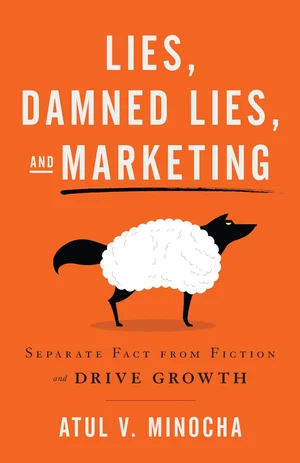

More, grouped by kind of result, are on the author results page.
Five ways people get this wrong
- Using revenue for the value of one client. A $40,000 engagement that costs $20,000 to deliver is worth $20,000 here.
- Counting only royalties. It makes almost every business book look like a loss, and it measures the least important thing.
- Counting every client after launch. Some of them were coming anyway. Count the ones the book brought.
- Leaving out your own time. Hours you spend writing are hours not spent billing. Add a fair value for them to the book cost, or choose a route where your time is small.
- Pricing things that have no price. A reader who writes to say the book helped them matters, but it is not a dollar figure. The calculator leaves it out, and value beyond money explains why that is a feature.
When you have your numbers, put them into the Book Value Calculator. It shows each line, the total, the payback point and the number of clients that pay back the book, so you can check every step.
Sources: The Scribe Method, How to Make Money With Your Book; Scribe Media pricing, read October 20, 2026; Amazon KDP, Paperback Royalty, checked October 20, 2026.