How authors make money
Every way a nonfiction author earns from a book, from royalties and advances to clients, talks, courses, licensing, translations, bulk orders and film options. For each one: how the money works, who it suits, and a Scribe author who earned that way.
The short answer
Authors make money in two ways. Direct income is paid for the book itself: royalties on each copy, an advance from a publisher, money from rights deals such as a translation or a film option, and bulk orders. Indirect income is paid for something the book led to: a client, a higher fee, a keynote, a course seat, a workshop, a licensing deal.
For most nonfiction authors, direct income is the small part. The Scribe Method chapter on how to make money with your book starts there: "You probably won't make substantial money just by selling copies of your book." The best public data agrees. In the Authors Guild's 2023 income survey of 5,699 published authors, the median book income for 2022 was $2,000 across all authors, including part-timers, and $10,000 for full-time authors. The same survey found that most authors earn about half of their writing-related income from sources other than their books.
Source: Authors Guild, Key Takeaways from the 2023 Author Income Survey, checked October 21, 2026. The survey counts advances, royalties and licensing fees as book income, and editing, teaching and speaking as other author-related income.
The author results below are strong ones chosen from Scribe Media's published success stories. They are not typical, and nobody can promise them. Each links to the full story.
Every income source in one table
| Income source | Kind | How it is paid | Suits |
|---|---|---|---|
| Royalties | Direct | A share of each copy sold, paid by the store or publisher | Books with a wide audience |
| Advance | Direct | Money up front from a traditional publisher, set against future royalties | Authors with an existing audience |
| Translation and foreign rights | Direct | A foreign publisher licenses an edition in its language | Ideas that travel |
| Film and TV options | Direct | A producer pays for the exclusive right, for a set time, to develop the book for the screen | Strong personal stories with a clear arc |
| Bulk and direct sales | Direct | Organizations buy by the hundred; authors sell direct | Books that teach a group |
| Clients and consulting | Indirect | Fees from clients who found or chose you through the book | Consultants, advisors, agencies, practices |
| Higher fees | Indirect | The same work, priced higher | Coaches, consultants, anyone who sets their own price |
| Speaking | Indirect | Fees for keynotes and talks the book earned | People who want to speak |
| Courses, workshops, licensing | Indirect | Paid programs built on the book's method | Authors with a teachable framework |
Money from the book itself
Royalties
A royalty is your share of each copy sold: on Amazon KDP, a percentage of the list price less a printing or delivery cost; with a traditional publisher, a rate set in your contract. The rates and worked examples are on book royalties explained, and the KDP royalty calculator works out your royalty per copy.
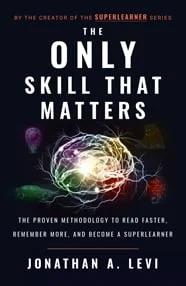
Royalties suit books that sell in volume. Jonathan Levi's story reports that The Only Skill That Matters sold almost 20,000 copies on Amazon, which he puts at about $83,000 in total net royalties. Shaan Patel earns $13 a copy on his Scribe book against 30 to 50 cents a copy on an earlier McGraw Hill bestseller (read his story).
Advances
An advance is money a traditional publisher pays before the book earns anything. It is paid against your royalties: you receive no royalty checks until the royalties your book has earned add up to more than the advance. The Authors Guild Model Trade Book Contract describes it as non-refundable and paid in parts, such as on signing, on acceptance of the manuscript and on publication. The Guild gives no typical amount: advances vary with the author's reputation, the subject and the publisher.
An advance suits an author a publisher wants to bid on, usually because the author already has an audience. The trade-off is ownership and a smaller share of each sale.
Translation and foreign rights
A publisher in another country pays for the right to publish your book in its language or market, on terms set in a license for that edition. If your publisher sells these rights for you, the Authors Guild model contract suggests the author keeps 75 to 80% of the income.
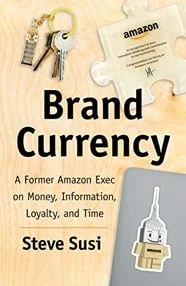
Steve Susi, Amazon's first executive creative director, wrote Brand Currency about the four things brands and customers trade: money, information, loyalty and time. The book was later picked up for a Korean translation (read his story). Translation suits ideas not tied to one country.
Film and TV options
An option gives a producer the exclusive right, for a set period, to develop your book into a film or series. An option is a possibility, not a promise that a film gets made. The Authors Guild's advice is to never grant film or TV rights to your book publisher, because publishers are rarely the ones best placed to sell them.
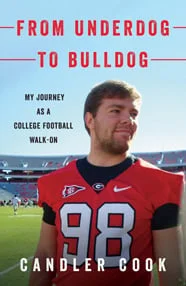
Candler Cook published From Underdog to Bulldog, about walking on to the University of Georgia football team. A film attorney introduced him to a production company, which optioned the book. His story reports the film is in development on a six-million-dollar budget (read his story). That figure is the film's budget, not a payment to the author.
Source: Authors Guild Model Trade Book Contract, Subsidiary Rights and Advance Against Royalties, checked October 21, 2026.
Bulk and direct sales
Some books sell by the box, to universities, sales teams and event hosts.
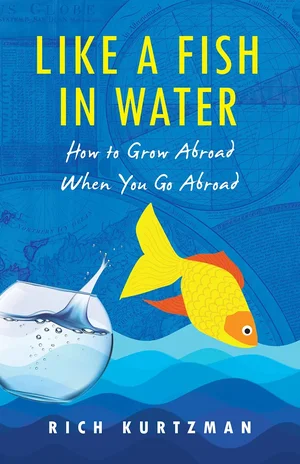
- Rich Kurtzman's Like a Fish in Water is required or provided by 10+ universities; his story reports a first university order of 75 copies and a single bulk order of 400+ (story).
- Rachel A. Williamson sells signed, personalized copies through her own site as well as Amazon, so she owns the customer relationship (story).
Bulk sales suit books written for a group with a buyer: a dean, a head of sales, a conference organizer.
Money the book leads to
This is where most nonfiction authors earn the real money.
Clients and consulting
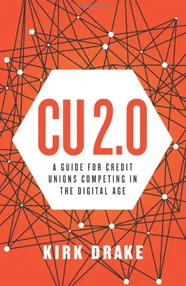
A prospect reads the book, then calls already convinced. Kirk Drake's story reports $50K a month in speaking and consulting revenue from CU 2.0, written for credit union leaders (story). Melissa Gonzalez's story reports several multi-million dollar consulting deals after The Pop Up Paradigm (story). This line suits anyone whose one client is worth thousands of dollars: consultants, advisors, agencies, physicians, lawyers.
Higher fees and licensing
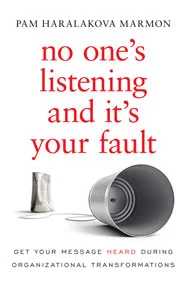
Pam Marmon charged by the hour for consulting before her book. After No One's Listening and It's Your Fault, she developed a licensing model for her content and charged for deliverables instead, and her story reports her revenue quadrupled (story). Licensing suits authors with a named method a company can roll out to its own people.
Speaking
Cameron Herold's story reports a $30,000 speaking fee after his books, up from $15,000 (story). It suits authors who enjoy the stage. Speaking fees and books shows how to count only the talks the book earned.
Courses and workshops
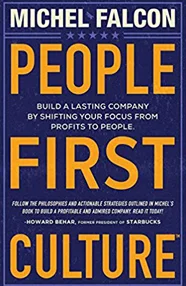
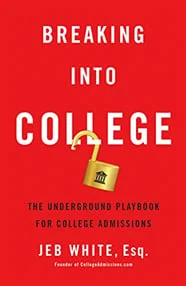
A book is a natural front door to a paid program. Michel Falcon built a $3,000 online course to sit between his $15 book and his $15,000 keynotes, and estimates the book has generated $250,000 for him (story). Jeb White gave away thousands of copies of Breaking Into College as a front-end offer and had 700+ students through his online course in year one (story). This line suits authors with a framework people can learn in steps.
How much do authors make a year?
Across all published authors, not much from books: the Authors Guild's 2022 figures put the median at $2,000 in book income and $5,000 in total author-related income. Full-time authors had a median of $10,000 from books and $20,000 in total. Those are medians across fiction and nonfiction, full-time and part-time, so half of authors earned less.
For a business author, a yearly total is the sum of the lines that apply. Here is how one year can add up when the book is used on purpose.
Say you are a consultant. In the year after your book comes out, you sell 400 copies at a royalty of $5 a copy (check your own figure in the KDP royalty calculator), win 2 clients who found you through the book, each worth $15,000 to you after the cost of the work, give 2 paid talks at $5,000, and sell 30 seats in a course built on the book at $400 each.
| Line | Arithmetic | Per year |
|---|---|---|
| Royalties | 400 copies × $5 | $2,000 |
| Clients | 2 × $15,000 | $30,000 |
| Speaking | 2 × $5,000 | $10,000 |
| Course | 30 seats × $400 | $12,000 |
| Total | $2,000 + $30,000 + $10,000 + $12,000 | $54,000 |
Royalties are $2,000 of $54,000, about 3.7%. That is what indirect income looks like in practice.
Count only what the book actually brought: a client who would have hired you anyway is not book income. How to value a book covers how to give the book honest credit. And the indirect lines take work: the authors above sent their books to the right people, built the course and pitched the talks.
Which lines fit you
Start with the line where one sale is worth the most to you, and ask whether the book can honestly bring a few.
- If one client is worth $10,000 or more, the client line will almost always outweigh everything else. Write for the reader who could hire you.
- If you already speak, a book on your talk's subject can raise the fee and bring bookings. Count only the change.
- If you have a method people can learn in steps, plan the course, workshop or licensing offer alongside the book, so readers have somewhere to go next.
- If your book serves a group, such as students, a sales team or members, plan for bulk orders and talk to the people who buy for that group.
- If your story would hold an audience, keep your film and translation rights.
- If you expect to live on royalties, check the math first. At $5 a copy, $50,000 a year means 10,000 copies sold every year. If your book is already out and selling far fewer, low book sales covers what that does and does not mean.
To put your own numbers on these lines, use the Book Value Calculator: it adds clients, fee increases, talks, royalties and other value, then shows the payback point against what the book costs.
Sources: Authors Guild 2023 Author Income Survey; Authors Guild Model Trade Book Contract, sections 4 and 6; all checked October 21, 2026. The Scribe Method, How to Make Money With Your Book. Author results from Scribe Media success stories, linked on each card and in the text.