How to read your Amazon book sales
What KDP Reports shows you, when the money arrives, what Best Sellers Rank does and does not mean, which sales never appear in KDP at all, and a 15-minute monthly routine that turns it all into one honest number for the calculator. Every KDP rule on this page was checked on Amazon's own help pages on October 21, 2026.
What KDP Reports shows
If you publish through Amazon Kindle Direct Publishing (KDP), your sales live in KDP Reports, at kdpreports.amazon.com or the Reports link at the top of your KDP account. It is a set of separate reports, and each one answers a different question. These are the ones that matter for an author checking sales:
| Report | What it shows | When it updates |
|---|---|---|
| Dashboard | Today's top-earning books, estimated royalties, orders, and pages read or listened | Every 15 minutes |
| Orders | Processed orders for all your formats and placed orders for ebooks; titles with the same name are combined into one row (the download splits them out) | Ebooks within 24 hours of the order; print within 24 hours after the copy ships |
| KENP | Royalties from pages read or listened to in Kindle+ | Finalized near the 15th of the following month |
| Royalties Estimator | Estimated ebook, paperback and hardcover royalties in a single currency | Within 24 to 48 hours; may differ from what is paid |
| Prior Months' Royalties | Royalties by month, converted at the exchange rate on the last day of the month | Near the 15th of the following month |
| Payments | Payments by sales period, filterable by marketplace and payment status | 60 days after the end of the sale month |
Two terms need a definition. KENP stands for Kindle Edition Normalized Pages: Amazon's standard page count for measuring how much of your book subscribers read. Kindle+ is the reading subscription that books enrolled in KDP Select are part of. You are paid from a monthly fund, by your share of all the pages read, and only the first time a subscriber reads or listens to a given page. A page read is not a copy sold, so keep it apart from your copy count.
For print books, a royalty is recorded when the copy is printed and shipped, a few days after the order. That is why print numbers lag ebook numbers, and why the Dashboard and the Orders report can disagree on any given day. A book returned in new condition and resold by Amazon does not earn you a second royalty.
For checking sales, the Orders report gives you the number of copies, and Prior Months' Royalties gives you what those copies actually earned.
Sources: KDP Reports, Royalties in Kindle+ and Old Sales Dashboard, all checked October 21, 2026.
When and how royalties are paid
KDP pays every month, about 60 days after the end of the month in which the sale was reported, as long as you have met the minimum payment threshold. So a royalty earned in March is paid near the end of May. Each marketplace (Amazon.com, Amazon.co.uk, Amazon.de and so on) is paid separately, so you can receive money for some marketplaces in a month and not others, usually because a smaller one has not reached the threshold yet.
Once paid, direct deposit can take one to five business days to reach your bank, a wire five to ten days, and a check up to 30 days. The Payments report shows what has been paid and for which sales period, which is the report to match against your bank statement.
Source: KDP, Troubleshoot Payment Issues, checked October 21, 2026.
What Best Sellers Rank means, and what it does not
Best Sellers Rank is the number in the Product Details section of your Amazon page. KDP's sales ranking help page describes it this way:
- It is based on your book's customer activity compared with the activity of other books. A rank of 50,000 means more activity than the book at 50,001, nothing more.
- It is updated at least once a day, though changes can take up to two days to show.
- It weighs recent activity more heavily, while taking the book's whole history into account.
- Each format, ebook, paperback, hardcover and audiobook, has its own rank. Category ranks can appear in up to three category lists.
- Because ranks are relative, yours can change even when your own sales do not. For a book with few sales, one sale can move the rank a long way.
The same page is plain about the limit: watching your rank is not an accurate way to track your book's activity. Amazon publishes no formula that turns a rank into a number of sales, so this page does not offer one. If you want to know how many copies you sold, the Orders report already has the number.
Rank is still worth a glance on one day: launch day, or the day after a podcast or a newsletter mentions you. If the rank jumps, something reached buyers. Then go to the Orders report for the count.
Sales that show up differently, or somewhere else
KDP Reports only counts copies sold through KDP. For many business authors, a large share of the copies that matter never pass through it. Here is where each kind of sale appears.
| Kind of sale | Where it shows up | What to do |
|---|---|---|
| Author copies you order from KDP | Nowhere in KDP Reports, and they earn no royalty, even when you resell them | Track them yourself. What you paid is a cost of the book. |
| Bulk orders placed on Amazon by a company or school | In the Orders report like any other order, with the normal royalty | Note the date and buyer, since KDP will not tell you who bought. |
| Bulk orders you fill with author copies | Nowhere in KDP | Count them from your invoices. |
| Bookstore and library sales through Expanded Distribution | A separate line item for each currency and marketplace, updated about 30 days after the end of the month of sale, at a 40% royalty minus printing | Expect these to arrive later than Amazon sales. KDP cannot tell you which stores bought. |
| Paperbacks or hardcovers sold through another distributor, such as IngramSpark | In that distributor's own reports | Add those copies to your total by hand. |
| Audiobooks made through ACX | In your ACX account, under Insights, then Sales Overview, covering Audible, Amazon and Apple Books | The daily figures are preliminary. Use ACX's monthly earnings reports for final numbers. |
| Signed copies you sell from your own site or at events | Your own records only | Count them, and the profit on each. |
KDP says Expanded Distribution royalties are paid later than Amazon sales: about 90 days after the end of the sale month on its payments page, and about 60 days after the distributors report their sales on its Expanded Distribution page. The Scribe Method chapter on self-publishing book distribution explains why many authors use both KDP and IngramSpark, which is also why their sales end up in two places.
Sources: KDP, Proof and Author Copies; KDP, Expanded Distribution; KDP, Troubleshoot Payment Issues; ACX, How do I check my sales information; all checked October 21, 2026.
A 15-minute monthly review
Do this once a month, after the 15th, when KDP has finalized the prior month's royalties and pages read. Keep a simple spreadsheet with one row per month.
Copy last month's orders (3 minutes)
Open the Orders report, set it to last month, and write down the copies by format: paperback, hardcover, ebook. Use the download if you have more than one edition with the same title.
Copy last month's royalties (3 minutes)
Open Prior Months' Royalties for the same month and write down the royalty by format, and the KENP royalty on its own line. Divide royalty by copies for each format. That is your real royalty per copy, after every marketplace and price you sold at.
Add the sales KDP does not see (4 minutes)
Add Expanded Distribution as it arrives, ACX audiobook sales from your ACX earnings report, other distributors, and copies you sold yourself. Log author copies you bought in a separate column, as a cost.
Check the money arrived (2 minutes)
Open the Payments report and match the payment for the sales period two months back against your bank statement.
Write one line about why (3 minutes)
A launch, a talk, a podcast, a newsletter mention, a bulk order. Over a year these notes tell you what moves copies, which is the question the rank chart cannot answer.
From copies sold to the calculator
The Book Value Calculator has a "Copies sold" line with two boxes: copies sold a year, and royalty per copy. Your monthly log fills both. Add up the last 12 months of copies across every channel for the first box. For the second, divide the total royalties those copies earned by the total copies.
Say your 12-month log shows 310 paperbacks that earned $2,046.00 in royalties, 140 ebooks that earned $460.60, and $95.40 in KENP royalties from pages read.
Copies sold: 310 + 140 = 450.
Royalties on those copies: $2,046.00 + $460.60 = $2,506.60.
Royalty per copy: $2,506.60 ÷ 450 = $5.570, about $5.57.
Enter 450 copies a year and $5.57 a copy. The $95.40 from pages read is not tied to copies, so put it in "Other value a year" and label it, or leave it out. Open these numbers in the calculator, then add your cost and the client and talk lines.
Two checks keep this honest. First, compare your real per-copy figure with the one the KDP royalty calculator gives for your Amazon.com list price. If yours is lower, sales through Expanded Distribution (40% instead of 60%), other marketplaces or discounts are pulling it down, and the real figure is the one to use. If your book has no sales history yet, use the KDP royalty calculator's figure and an honest guess at copies. Second, leave out the author copies you bought to give away. Book royalties explained covers why they belong in the cost of the book, and the client line is where they pay off.
For most business books, this line will be small next to the others, and that is normal. If your log shows a few hundred copies a year, low book sales covers how to check what the book is doing for your business anyway.
What strong sales have looked like
Some Scribe authors have published their sales figures. They are strong results chosen from Scribe Media's published success stories, not typical ones, and nobody can promise them. Each card links to the full story.
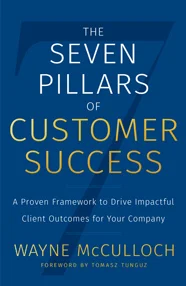

Wayne McCulloch sold more than 2,000 copies of The Seven Pillars of Customer Success in the first few months after launch. His story spends more time on what followed the sales: five to seven recruiters contacting him every week, up from one recruiter a few times a month, and a job offer from someone who reached out because of the book (read his story).
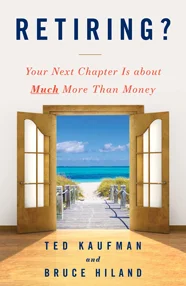
Bruce Hiland and former Senator Ted Kaufman were told that 1,000 copies in the first year would be a home run for Retiring? They sold more than 4,000. Their story also reports that more than two-thirds of their Amazon sales were organic, meaning buyers searched for the book directly rather than finding it through a recommendation (read their story).
Sean Rogers sold more than 6,000 copies of Rising Above in the eight months after publication, and his story reports that he made his investment back almost twice over. The book was also stocked by Barnes & Noble, Target and Walmart (read his story).
Whatever your number is, write it down every month and use the real figure. The Book Value Calculator shows how much of the book's value it carries next to clients, fees and talks.